

Everyday staples, one change at a time
Everyday Foods and the Swaps That Matter
Five UK staples do most of the work: wholemeal bread, pulses, brown rice, oily fish, and lower-fat dairy. No overhaul, no specialty shop.
The changes that stick are rarely dramatic
They happen in the same supermarket, on the same budget, using food you already cook. This page takes five familiar items and shows what each one does, why it is worth adjusting, and how to use it without turning dinner into a project.
What this page covers
- Wholemeal bread as the easiest first move
- Pulses that make a meal more filling for pennies
- Brown rice as a base for lunches that hold
- Oily fish once or twice a week, tinned included
- Lower-fat dairy where you already use it
Bread
Wholemeal Bread: The Easiest Swap You'll Make
Wholemeal bread shows up in UK guidance as a fibre-rich food to base meals around, and it is the least disruptive change most men can make. It works at breakfast and lunch, needs no cooking skill, and costs about the same as white.
The texture is denser, which some men do not love at first. Give it two weeks. If you genuinely cannot stand it, try a 50/50 loaf and build from there. The goal is a habit, not a purist stance.

Pulses: Cheap, Filling, and Underused
Lentils and beans are among the richest sources of fibre, and the British Nutrition Foundation highlights them as key pulse foods. They are also one of the cheapest ways to build a meal.
Bolognese
Stir a tin of lentils through the sauce. Same pan, same taste, more fibre and a bigger portion for the same money.
Curry
A tin of chickpeas goes in where you would have added potato. It thickens the sauce and keeps you full longer.
Soup
Blend a tin of butter beans into a vegetable soup for body. It thickens without cream and adds fibre quietly.
Tinned chickpeas, kidney beans, and lentils need no soaking and no skill. Add them to a meal you already cook and you have made it more filling and more fibre-rich without changing what it is. That is the whole trick.
Brown Rice: A Base for High-Satiety Lunches
Brown rice is named in UK guidance as a fibre-rich wholegrain choice, and it is a lower-refined alternative to white rice that pairs easily with protein and vegetables. It takes longer to cook, which is why it is worth making a big batch and using it across two or three days.
Base
A generous scoop of cooked brown rice, batch-cooked on Sunday
Add protein
Whatever came home with you: chicken, tinned tuna, eggs, or a tin of pulses
Add vegetables
Anything in the fridge, raw or roasted. Frozen works just as well
Add flavour
Olive oil, lemon, chilli, soy, or a spoon of yoghurt. This is the part that decides whether you repeat it
Men who want lunches that keep them full through an afternoon meeting tend to do well with a brown rice base, a protein, and whatever vegetables are in the fridge. The pattern matters more than the recipe.

Oily Fish: One or Two Portions a Week
Salmon, mackerel, sardines, trout, and herring are the usual UK oily fish, and the standard recommendation is one or two portions a week. Tinned sardines and mackerel cost a fraction of fresh fillets and count just the same.
If you do not like fish, this is the swap with the least easy substitute, though walnuts, flaxseed, and rapeseed oil provide a shorter-chain omega-3. Worth trying tinned fish in a pasta or on toast before writing it off.
Lower-Fat Dairy: A Routine Swap, Not a Rule
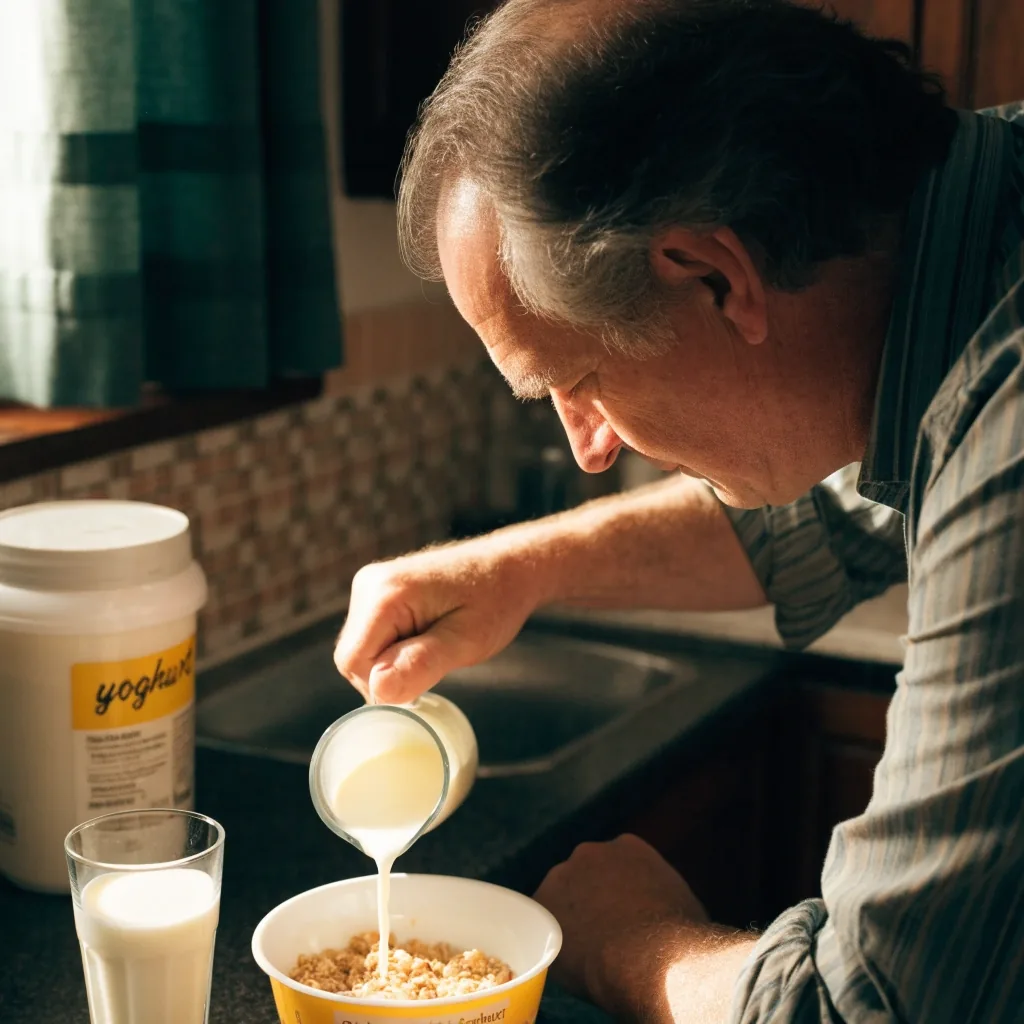
Lower-fat dairy is routinely recommended as a swap in UK heart-health messaging, mostly because it reduces saturated fa without removing the calcium and protein. Semi-skimmed milk, lower-fat yoghurt, and reduced-fat cheese are the obvious moves.
That does not mean full-fat cheese is off the table. It means the everyday dairy you do not think about — milk in tea, yoghurt at breakfast — is the sensible place to make the change first. The heart health guide covers the saturated fa side in more detail.
Vegetables: Half the Plate, Loosely
The five-a-day message is familiar enough that most men over forty can recite it, and most still do not hit it. The realistic fix is not a salad every day. It is adding vegetables to meals you already eat: onions and peppers in a curry, spinach wilted into a pasta, frozen mixed veg roasted alongside a chicken. Frozen counts and lasts longer. The half-plate guideline is a rough shape, not a rule to measure.
A note on ultra-processed foods
What to Do With Ultra-Processed Foods
Ultra-processed foods are not a moral category. They are a practical one: they tend to be high in salt, saturated fa, and things you would not add at home, and they are easy to eat past fullness.
You do not have to eliminate them. You do have to notice how much of your week they occupy. If most breakfasts, lunches, and snacks are packaged, that is the place to start. One meal at a time.
Where to start
- 1Pick the meal you eat the same way every day — usually breakfast
- 2Swap one packaged item in that meal for a whole one, and hold it for two weeks
- 3Move to the next meal only once the first one stops needing thought
Building a Week Around These Foods
A workable week might look like this. Nothing here is exotic. Nothing requires a specialty shop.
Mornings
Wholemeal toast or porridge most days
Swap: the white loaf for a wholemeal or 50/50 one
Lunches
Brown rice or pulse-based, three or four days
Swap: the meal deal sandwich for a batch-cooked base
Fish
Oily fish once or twice a week
Swap: one meat dinner for tinned sardines on toast or in pasta
Dinners
A protein, vegetables, and a wholegrain
Swap: white rice or potatoes for brown rice on two nights
Dairy
Lower-fat where you already use it
Swap: the milk in your tea and the yoghurt at breakfast
The meal planning page has more on how to structure the days, and the heart health guide covers the salt and saturated fa side in more detail.
Questions men ask before they start
Straight answers to the things that come up most often when swapping everyday foods. If yours is not here, write to us and we will answer it.
Send us a question
Do I have to give up white bread completely?
No. A 50/50 loaf is a reasonable middle step, and it is still a step. What matters is that the fibre comes from somewhere across the day, not that you never touch white bread again.
Is tinned fish as good as fresh?
For the purpose of getting oily fish into your week, tinned sardines and mackerel count the same and cost much less. If price or cooking has been the barrier, the tin is the way in.
Do pulses cause bloating?
Some men notice it at first, especially if they go from almost none to a lot in one week. Start with a couple of tablespoons and build up over two or three weeks. Rinsing tinned pulses well helps.
Can I make these changes if I cook for a family?
Most of these swaps happen inside a shared meal rather than replacing it: a tin of lentils in the bolognese, brown rice instead of white, extra vegetables in the curry. Nobody at the table has to eat differently.
Where should I start if I only change one thing?
Wholemeal bread, because it needs no cooking and costs about the same. Hold it for two weeks, then add a second change. The nutrients page explains what each one is doing.
Start with one swap this week
Pick the change that fits the way you already eat. Hold it for two weeks before adding another. If you would rather have the week laid out for you, the meal planning page takes it from here.
Address
42 High Street, Kensington, London, W8 4PE, United Kingdom
Phone
Open Monday to Friday, 9:00 AM – 6:00 PM. Prefer to talk it through? Reach us on the contact page.